Star Wars: The Force Awakens? A Spoiler-Filled Review

I am writing a fluff paragraph introduction in order to give people a chance to avert their eyes from this spoiler-filled post. I went to Star Wars: The Force Awakens with very little prior expectations. I think I watched one of the trailers once. I did not read or listen to very much of the commentaries, predictions, etc. I heard that Abrams had re-signed all of the major cast members, but I tried not to let that color my expectations (especially when the trailer showed a lot of new characters). I also want to say that I went to see the movie with a couple of good friends of mine, and I had an awesome time hanging out with them. In that sense it was a worthwhile evening for me.

So I came to the theater with kind of a blank mind. I do not go see movies in theaters very often, so usually I am overwhelmed by the big screen, big sound, etc. I enter right into the movie and have a good time. Episode VII was different for me. I was not mentally analyzing the movie at all until about two thirds of the way through the movie, when I surprised myself with the realization that I was feeling bored. Please note that this was a feeling, not an overly analytical rational conclusion. I was at a Star Wars movie, and I was feeling bored. As the movie reached a climax, so did my boredom. Except for a few moments of laughter, I only got more bored as the movie went on. The force may have been awakening, but I was having trouble staying alert.

So after the fact, I began to analyze why it was that I was feeling bored. This analysis mostly stems from the time period after watching the movie, but some of it did come to mind near the end of the movie. I do not have time to organize this post, so it is going to be somewhat stream of consciousness. What follows is almost completely negative. This is not because my impression of the movie was completely negative. It is because I am trying to explain my boredom.

The main reason for my boredom was that the movie is “derivative,” as a lot of critics have said. It was basically a retread of elements from the original movies. I think this was a combination of fan service and fan reassurance – sending the not-so-subtle message that they were returning to what everyone loved about the original Star Wars. It may have been reassuring, but it was also boring.

I mean, c’mon, the Starkiller is essentially Death Star 3. I thought the second Death Star was redundant when I watched Return of the Jedi for the first time. Why would I not feel the same about Death Star 3? Saying it was bigger didn’t help. Saying it was a modified planet only made it harder to believe. Why is there ANOTHER trench scene? Why is there ANOTHER fatal weak point in the defenses? Actually, Death Star 3 seemed the easiest one to destroy yet. No bullseye-ing of womp rats necessary.

And that is just one of a multitude of ways in which the movie is just a regurgitation of past Star Wars elements. I could go on at great length. Unlike other fans, I was not geeking out by all of these obvious plagiarisms. What made Star Wars great was its originality, not its traditionalism. And by originality, I mean coming up with better ideas than Jar Jar.

I also thought the director/writer/whomever-is-to-blame made some classic errors. The timing was painfully slow at critical moments. Nothing is more boring than watching a psychic interrogation from the outside…for second after second after second. We all knew Ben was going to kill Han, so why did we have to stare at the lightsaber for twenty minutes? And speaking about staring at lightsabers, what is up with the ending? How long did Rey hold out that lightsaber for anyway? My arm was getting tired for her. It was painful to watch.

Major surprises were telegraphed. As soon as people came for Han on his smuggling ship thing, we all knew the problem was going to be solved by releasing the scary cargo. We just had to wait for it, and wait for it… As soon as Han said “meet back here” we all knew he was going to bite it. Again, we had to wait for it, and wait for it, and stare at the lightsaber, and wait for it…

They tried to throw us into the middle of the action, but I had to work too hard to understand things, especially the political situation. Who is the First Order? How is the Republic different than the Resistance? How is the Resistance different than the Rebellion? When the Starkiller blew up a planetary system, who did they blow up and why? And why does nobody know what happened 30 years ago? Tattoine – I mean Jakku – was the location of a decisive battle against the Empire. I would think most people living there would have some idea of what happened. How did Kylo Ren turn evil? That seems pretty improbable to me.

And then the movie explained things that did not need explaining. For instance, we had to hear the explanation of the force…again. Who in their right mind was watching the new movie without seeing the old ones? It’s a continuing story! It’s not a franchise reboot on an alternate timeline like Star Trek. Explain to us the stuff we don’t know, not the stuff we do know.

The movie too often settled for telling us rather than showing us. How do we know that the First Order is scary and strong? Because Finn told us so. I certainly wasn’t impressed with them from what I saw otherwise. How do we know that Han and Leia loved each other but were in a fight? Because everyone kept telling us. When I saw them together, I did not feel any vibe.

I can’t put my finger on the reason, but I did not feel very emotionally attached to any of the main characters. I didn’t care about the new characters. The return characters didn’t grab me either. R2D2, a perennial favorite, basically wasn’t in the movie. Did they not know that C3PO and R2D2 (for good or for ill) are critical to the success of a Star Wars movie? C3PO just didn’t talk or act like C3PO. Saying “Thank the Maker” once just doesn’t cut it – especially now that we know who his maker was. I felt like Harrison Ford and Carrie Fisher were playing nostalgia rather than acting.

Let me run through some of the characters and stuff from the movie.

Kylo Ren/Ben: OK, so maybe the actor was better than Hayden, but he is almost the same character…maybe worse. I was not intimidated by him from the get-go. He was too scrawny and too much of a Vader rip-off. That of course was the point. He is supposed to be like that. Which makes it all the more annoying. We didn’t get a “good” villain. I think from the way he treats Rey he is more of a creeper than Anakin, and he is even more of an emotionally uncontrolled adolescent. Childish tantrums are not necessary to being a dark Jedi. Look at Palpatine, Vader, Dooku, etc. The Sith were supposed to be sneaky and devious even though they used hate and rage as weapons. What kills me is that the Star Wars expanded universe is chock full of very interesting villain material. Why did Episode VII have to use the despised Anakin as its model? As a side note, I really liked the idea of his lightsaber in concept, but I thought it was kind of dumb in the movie, especially because when it was onscreen it was all you could see.

Supreme Leader/Gollum: A large hologram does not a scary villain make. A big scar does not a scary villain make. After Palpatine, the Supreme Leader seemed tame to me. What does he have that makes him such a big deal? The next couple of movies better have some big reveals.

The First Order/The Empire Lite: I found the First Order less than impressive. We saw one base the size of a planet. But this one base seemed to be almost completely lacking in defenses. There are a few hundred storm troopers. We also saw one large super-star destroyer type thing. When the General called out “all” of the squadrons, the resulting 25 TIE fighters were laughable. Does the Supreme Gollum have a huge fleet hiding up his flaring nostrils?

First Order General guy: No Grand Moff Tarkin. He’s not even any of the various guys that Vader chokes. I can’t remember his name. All I know is that he was stupid enough to build Death Star 3 with a weak spot larger than Beggar’s Canyon, nevermind a womp rat. And he was stupid enough to barely guard it. And he was stupid enough to put the energy of a star inside a planet. And he was stupid enough not to evacuate immediately. Again, I am not scared.

Silver Stormtrooper(ess): Is her armor functional or just a fashion accessory? Apparently the scariest thing about her is that she sent Finn to remedial training, and then she is so pansy that she shuts down the shields for the entire base at gunpoint without a fight. If she is the best and brightest of the First Order, then why hasn’t the Republic sneezed them into submission?

Poe: Who is this guy? OK, so he’s a great pilot, but if we are not really going to get to know him, why tell us much about him at all? And I’m sorry, but I didn’t buy the instant bond between Poe and Finn. Introducing a character is different from developing a character.

Finn: Apparently all you have to do to get this guy to like you is not be First Order and tell him your name. His main role in the movie was to whine, sweat, and tell us how scary the First Order is (because otherwise we wouldn’t have been scared).

Rey: I know more about the force than Luke knew by the end of the original trilogy…totally by accident…

BB8: Relatively lovable. I am not sure why we needed a new R2 when R2 is still around. And what’s with the bobbing head? Either his method of moving works, or it doesn’t. I would think they would be able to keep his head from continuously falling, or else they never would have made a droid like that. If his head controls need to be recalibrated, then why didn’t Rey fix him?

Some other comments.

Where did all of these new force powers come from? So Ben is able to interrogate people telepathically? Somehow if that were possible with the force, I think Vader would have used it on Leia. And Ben is able to stop and hold a blaster bolt in mid-air? Really? I mean, cool visually, but I found it distracting. And again, why was Vader not able to do this?

Do the guys who made this film know anything about science at all? Of course it’s supposed to be a fictional space opera, so we shouldn’t expect too much in the way of science. But the original Star Wars tried not to get too far out with its science. On the other hand Episode VII trampled all over science. How was Han Solo able to see the Starkiller beam and the resulting explosion? Those things should have been light years away. And the Starkiller sucks the energy from a star? Does that mean the whole planet moves from star to star? If so, how does it move? How does the atmosphere stay intact? How is this any easier than building a space station? Did they realize how devastating it would be to a planet to lose its star? We are talking meteorological disaster! And when the star gets sucked up, where is all of the ambient light coming from? Why is the planet not pitch black? The lightsaber battle should have been happening in the dark. And then when the planet explodes it turns into a star? Really? Again, cool visual effect, but totally absurd! And by the way, how in the world did the Millennium Falcon survive atmospheric re-entry at light speed? Did they watch Han Solo’s explanation of the hyperdrive in the original Star Wars? And since when did travel times in the Star Wars universe get so compressed?

Conclusion.

Apparently the point of this movie was to be so much like the originals that it would scour Jar Jar from our minds (if that were only possible). It accomplished this by blatantly repeating much of the originals. I felt it made it boring as a movie in its own right. I also thought it was unnecessary in light of the fact that this is supposed to be a continuing story. However, we have yet to see the next two episodes. Maybe when we watch the next movies Episode VII will be proven to be worthwhile. Or at least, maybe Episode VII may be the boring setup movie that we endure watching in order to complete an otherwise exciting series. Episode VIII, you are our only hope.
Posted in Uncategorized | 6 Comments

Are Adam and Eve Myths?

Hero and Villain,

You raise a lot of questions surrounding Adam and Eve and the first chapters of Genesis, and I would like to deal with all of them.

Before I start, though, are you aware that there are a lot of Bible-believing, Christian scholars and scientists who think that the first few chapters of Genesis are intended to be symbolic/poetic accounts rather than factual/historical accounts? To these people, what is most important is not the factual details, but rather what those details mean and teach us.

I do not agree with that position, but I do not have a lot of problems with it as long as the main ideas are maintained. For instance, a lot of Bible-believing scientists would say that God created the universe billions of years ago by means of the Big Bang, and then God created life by means of a lengthy evolutionary process. Scientists like Hugh Ross believe that they can see these scientific processes described in the symbolism of Genesis 1. What matters most to me is that these people still believe that God created the world and that human beings have value, since those are the main points of Genesis 1-2.

Even though I do not agree with this perspective, I bring it up because I want you to understand that some of the points you make are accepted by many Bible-believing Christians. They agree with some of what you say. Also, I want you to understand that some of your points do not trouble me as much as you might have thought. I have Christian friends who say the same things, and yet still believe that the Bible is true!

On to your actual points.

You state that Genesis 1 and Genesis 2 are contradictory accounts. Genesis 1:26-30 gives an account of God creating Adam and Eve. Then Genesis 2:4-25 gives a second account of God creating Adam and Eve. There are several options for reconciling this double account. In my view when I read Genesis 1-2, it seems clear to me that Genesis 2:4-25 is merely a more detailed account of Genesis 1:26-30. Genesis 1 gives an overview summary of the creation of the entire universe. Within that summary, the creation of Adam and Eve is also summarized. In Genesis 2, the book zooms in to the events of the sixth day of creation and describes those events again, but in greater detail.

You ask why the book would give two accounts of the same event back to back. I cannot answer something like that with absolute certainty, but I can give a couple of suggestions. First, I think it is the right question to be asking. You are supposed to be wondering why the book goes into such detail about the creation of Adam and Eve. It has to do with the central place that God has given human beings in his creation. Second, if you skim through the book of Genesis, I think you can see that it is divided nicely into small chunks designed for oral retelling. Genesis is not just intended to be read straight through. It is also organized in such a way that individual stories can be told in a standalone fashion. As a reader you can choose to read Genesis 1-2 in one sitting, or the two chapters can be divided and read separately.

You wonder about the number of ribs. The Bible does not give us any reason to believe that Adam had 25 ribs to begin with. I would assume that he had 24 just like anybody else. After God removed one of his ribs, he would have had 23. All of his children would have had 24. If you removed one of my ribs and if I had any more children, my child would be born with 24 ribs. Removing a rib does not change the genetic material.

Did God create Eve as a clone of Adam? Since God used Adam’s rib to create Eve, was Eve like Adam’s clone? Well, Eve could not possibly be Adam’s clone if only because she was female. We have no idea what God did with Adam’s rib in order to create Eve. Did he use Adam’s DNA but then change the Y chromosome to an X? The Bible does not say one way or another. Since God created Adam from dirt, I think it entirely possible that God could have used Adam’s rib in such a way that Eve was very different genetically.

Why did God make man out of dirt and woman out of a rib? Why does God change up his method of creation? Again, I think this is the right question to be asking. God doesn’t do these things because he is an absent-minded mad scientist. He has a reason. There are reasons why God makes man out of dirt. It teaches humility, the circle of life, etc. There are reasons why God makes woman out of a rib. Some possibilities are that since she is taken from the side of man, she is his equal and companion. She is taken from region of the body associated with feelings and the soul, implying that the relationship between man and woman is close and personal. She is made of the same stuff as man, so again she is equal. Paul comments on how it makes a beautiful symmetry, since every man after Adam was born of a woman, but the first woman came from a man – another circle of life thing.

Was there incest in the Garden of Eden? You have mentioned incest in the Garden on several occasions. I think you have two reasons for mentioning it. First, if Eve is Adam’s clone, then is it incestuous for Adam and Eve to have intercourse? Again, Eve could not be Adam’s clone, and she may not have even been a female version of Adam’s exact genes. Even if she was, what I have to say below, applies.

Second, I believe you may be implying the common problem of where Cain got his wife. How did Adam and Eve’s children find husbands and wives? Did they all marry siblings? It is actually nowhere stated where Cain or Seth found their wives. It is theoretically possible that God created wives for both of them. I kind of doubt that, however. We do know that Adam and Eve had other children besides Cain, Abel, and Seth (see Genesis 5:4), so I would assume that both Cain and Seth married their sisters.

Wait, what? Isn’t that incest? Well, if it is incest, then there is a good chance that even according to atheist scientists the human race is the product of incest. There is some possibility that scientists can prove that all human beings trace back to a common mother known as Mitochondrial Eve (and perhaps even a common father). Whether or not this can be proven scientifically, it just seems obvious that in an evolutionary scheme a new species must initially multiply by “incest,” or else they cease to be a unique species. The issue of incest is as much a problem for people who do not believe the Bible as it is for people who do believe the Bible.

But why does the issue of incest not bother evolutionary biologists? For one thing, there is a matter of necessity. If you are the only two homo sapiens and you want to perpetuate your species, you must procreate and have your children procreate with each other. For another thing, there is the lack of danger of genetic issues. One of the main reasons for banning incest is that excessive inbreeding causes genetic deformities and other genetic problems. However, early on in the history of a species, there has not yet been enough inbreeding to make this an issue. As portions of the population divide up and only breed within their isolated group, the gene pool becomes more and more limited, and then genetic issues are more likely in incestuous relationships.

You can actually see this in the Old Testament. God does eventually put a stop to incest, but it is only after the gene pools in the various people groups have become more limited. Although God does not entirely explain why he bans incest, I think he was well aware of the genetic dangers involved, and I think that would have been one of his reasons.

So, a question for you, how do you explain the “incest” among your early ancestors?

Posted in Uncategorized | 2 Comments

Why Do You Doubt Miracles?

Hero and villain,

Before I respond to the specific issues you raise, I wanted to respond to a common thread that runs through your comments: skepticism concerning miracles.

Are you writing off the Bible as a fairy tale simply because it contains stories of miracles? In other words, are you assuming that miracles cannot ever happen under any circumstance, and that any account of a miracle must therefore be false? If so, then why do you believe that way?

In your comments, I can find at least three reasons why you are skeptical of miracles. I am doing my best to represent your ideas, but please correct me if I have misunderstood you!

First, you have trouble with the miracle stories because they are unique. You say, “Have you ever seen a talking snake?…I have never seen anyone split a river. I have never seen a burning bush talking to me.” In other words, you are troubled by the fact that some of the accounts of miracles are foreign to the experience of most human beings throughout history.

It is true that the Bible records events that are historically unique, but that is the point. The uniqueness of these events is what makes them important and what makes them worthy of recording in written form. The Bible does not record all of the normal, everyday, boring things that happened to every human being who has ever lived. Miracles were not happening all of the time or all over the place. Miracles were important, landmark events in biblical history.

This is similar to what we find in any history book. History books do not record every time that George Washington stopped to take a sip of water or adjust his wig. No, only the memorable and significant events are recorded, and the most memorable and significant events of history are all unique. This does not cause us to doubt that the events happened. It is their uniqueness that has made them so memorable.

Second, you have trouble accepting miracle stories because you yourself have never witnessed a miracle. I am in the same boat. I would have to say that I have never personally witnessed a miracle. Does this make me doubt that miracles have happened? Not really. As I said above, it is the uniqueness of miracles that makes them so significant. Furthermore, I have never personally been an eyewitness to any significant event of history, but this does not cause me to doubt any of those historical events.

Third, and perhaps most foundationally, you reject miracle stories because miracles violate the laws of science. There is a sense in which I agree with you. Miracles are by definition events that appear to us to contradict, supersede, or bypass the normal ways that we have observed the world to consistently behave. This is exactly what makes miracles so unique. If the events of the Bible could all be explained by a simple appeal to the laws of science, what would be the point of the Bible?

I would like to put forward four thoughts about miracles and science. First, miracles affirm the laws of science. Miracles are only special if the world generally operates according to a set of predictable laws. The fact that the Bible bothers to record miracles demonstrates that the Bible assumes that the miracles are far outside of the norm. The Bible assumes scientific law. That is why the Bible records miracles.

Second, miracles actually do not “violate” scientific law. Let me explain what I mean by using an example. If I were to drop a book, we would all predict that according to the law of gravity, the book should fall to the floor – all things being equal. In other words, as long as nothing interferes with the book’s fall, the book should fall all the way to the floor. But suppose when I drop the book, someone steps in to catch it. Since someone catches it, the book does not fall to the floor. Has the law of gravity been violated? No, because the law of gravity predicted that the book would fall to the floor only if nothing else interfered. Something else did interfere, so everything happened as the law of gravity predicted.

This is how things work with miracles. The laws of science always operate as long as nothing else interferes. With a miracle something interferes. God steps in and acts. God does not violate the laws of science any more than catching the book violates the law of gravity.

Third, there is a sense in which the laws of science are themselves miraculous. The Bible teaches that God created the universe with all of its “laws.” The Bible actually takes it further. God not only created the laws of the universe, but he also is the one who maintains them (see for instance, Genesis 8:22). The reason the universe is such an orderly, predictable place (scientifically speaking) is because God works tirelessly and vigilantly to keep it that way. From this perspective, miracles are a lot less troubling.

Fourth, without the perspective of God-maintained order, how is anyone able to put such faith in scientific law? The reason I am so confident that gravity will continue to work is that I believe in an orderly God who maintains the law of gravity. How does anyone who doesn’t believe in God have that same confidence? How can anyone believe that the laws of science have always been and will always be? There is no reason to believe that way without God. It is merely wishful thinking or a philosophical assumption.

So, I am very comfortable with both the laws of science and the historicity of biblical miracles. I believe that the existence of the God of the Bible adequately explains both scientific law and miracles. But I am curious, how do you explain your belief in scientific law?

Posted in Uncategorized | 2 Comments

The Lord Reigns: Thoughts on Psalm 93

God is king. He doesn’t just hold a title. He is not just a figurehead or a holdover from a past era. He actively reigns.

God’s kingship is not just a brute fact. It is glorious. He is a king who reigns in majesty and beauty. He deserves not only obedient allegiance, but also awe and worship.

God’s reign is universal. There are no boundaries to his empire. His territory extends the full limits of time and space…and beyond. Every force of nature, every object, every living thing, every human nation, and every human being are within his rightful domain.

God’s reign is eternal. He has always been king. There was no coronation ceremony. No one died to give him the title. No one crowned him. No one voted him into office. No political movement propelled him to the throne. No historical document began his reign or enshrined his dynasty.

God will always be king. He will never die. No rebel movement can overthrow him. No challenger can usurp his power and authority. No plot can bring him down. His reign is not dependent on the will of his people.

God’s justice is inescapable. No evil is hidden from his sight. No wrongdoing will go unpunished. His judgments are final, and his wrath is total.

God’s power is limitless. His strength is not measured by the number of his soldiers or the technology of his weapons. His might is in his own hands. There is nothing that can stop him from accomplishing all that he desires and has planned. There is no obstacle he cannot overcome. There is no vow that is beyond his ability to fulfill.

God is truthful. He never lies. He always keeps his promises. He never hides from his people information that they need to know. There are no surprise skeletons in his closet.

God’s laws are perfect. His decrees aim towards justice and peace. His commands can be trusted to lead to life of goodness and joy.

God is holy. He is neither corrupt nor corruptible. There is no tarnish on his record. He himself is the standard of perfection. Only people who reflect his holy perfection may come into his presence without fear.

Posted in Uncategorized | Leave a comment

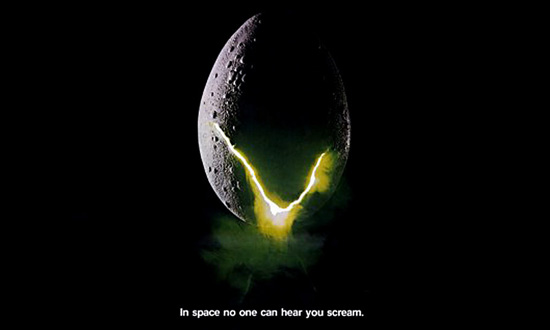
In Space No One Can Hear You Scream

AlienTagline

I was asked my opinion of a video on YouTube: https://www.youtube.com/watch?v=HfegFnaRcqE. I would not recommend watching the video, but if you happen to watch it, I have written out some thoughts in response. The video is produced by TBU News, which is not exactly a credible news organization. It seems to have a bent towards parascience and conspiracy theories.

I could not make it through more than 1 out of the full 5 hours of the video. I ran into quite a lot of factual inaccuracies and facts presented in misleading ways. I happen to be a little bit of a science buff, so I was able to detect a lot of problems. My science explanations may not be perfect, but I think they are closer to the truth than the explanations in the video.

I go through some of the categories of ideas in the video, explaining various inaccuracies, and then I offer a couple of concluding thoughts.

Sound: Not all vibration is sound. Sound is almost a side-effect of vibration. The old advertisement for the movie Alien said, “In space no one can hear you scream.” In space, you may be able to get your vocal chords to vibrate, but that vibration does not become sound unless there is an atmosphere with particles to be compressed by the vibrations of your vocal chords. The vibrations of extremely small particles do not produce any sound. The particles are too small. Furthermore, sound cannot cause these particles to vibrate. No sound can occur at a high enough frequency or small enough amplitude.

The movie shows lots of cool patterns created by sound waves. These images are very misleading. They are actually interference patterns created by sound echoes. Acoustics engineers are very familiar with such patterns when designing sound systems for theaters, churches, etc. If you produce sound from one location in an enclosed space, the sound waves will bounce off the walls, ceiling, and floor of the enclosed space creating patterns of interference. Positive interference is created in places where the crests of more than one sound wave meet, causing the sound to be louder. In negative interference, a crest meets a trough, causing the sound to be cancelled out. So those cool patterns are just the patterns of positive and negative interference of sound passed through a medium.

What makes it so misleading is that the people are not “discovering” these patterns. They are creating the patterns. The patterns are determined by the frequency of the sound, the make-up of the substance they play the sound through, the shape of the enclosed space in which they play the sound, etc. An acoustics engineer could design all kinds of such patterns.

Something else that is misleading is the idea that sound could have similar effects on any substance, but that is not the case. Playing sound at a stone wall will have negligible impact on the shape of the stone. Directing sound at the human body will make little permanent changes in the shape of any structures in the body.

Finally, the concept of patterns is in the mind of the beholder. The people running the experiment only stop at certain frequencies. This is because they do not think that the intervening frequencies create patterns. In other words, it is the human mind that declares one thing to be a pattern and something else to not be a pattern. This principle explains why some of the sound patterns match the geometric patterns in ancient art. It is not that the ancients knew about secret, fundamental patterns in nature. Rather, the people running the sound experiment stopped at frequencies that produced recognizable and aesthetically pleasing patterns.

Emotions: It may be that our brains place emotions into two general categories: positive and negative. The video calls these categories love and fear. However, it is a gross oversimplification to say that we only experience two different emotions. I think we are all able to distinguish between hate, anger, and fear. We are also able to distinguish between the enjoyment of a video game and the love we feel for a wife/husband.

I do not believe that the brain waves produced by our emotions can be described as a simple frequency. It is my understanding that brain waves produce patterns across the surface of the brain, and I use the term “pattern” loosely.

Furthermore, brain waves are not very powerful signals. It is doubtful that brain waves have much significant (if any) impact on the surrounding environment. In fact, brain waves do not have any significant direct impact on the body of the person producing them. Brain waves are too weak to alter the chemical make-up of a substance. That kind of alteration requires relatively powerful radiation.

DNA: DNA probably does not have any unused segments. Those segments probably serve some purpose – if only as placeholders. It is like saying the spaces between words are not useful. The truth is that spaces, even though they are not letters, assist the reader in decoding the meaning of the letters. Or it is like the pauses between the dots and dashes in Morse code. Morse code would be completely meaningless without the brief moments of silence between sounds.

I would be extremely surprised if DNA could be modified by means of emotional brain waves. I doubt the frequency of brain waves is high enough or the amplitude of brain waves is small enough for brain waves to connect with a DNA strand more than once. Even if a brain wave could connect in the patterns shown on the video, I would find it hard to believe that a brain wave would be strong enough to alter that DNA strand in any way. And even if a brain wave could alter a DNA strand, chances are that any changes made would be harmful – in the same way that the sun’s UV rays cause cancer.

The Phantom DNA experiment sounds like a hoax to me. I am not sure about the science behind detecting the arrangement of photons in a contained space. Photons travel in the wave-particle duality of light. What does it mean for them to be in a pattern? How would you detect that pattern?  How would you insert DNA into a vacuum? How would you detect changes in the pattern of photons as a result? My guess is that if the photons “clung” to the DNA, there is probably a simple explanation for it, such that photons would behave in a similar way when interacting with any molecule. Furthermore, even if there truly was some sort of phantom effect when the DNA molecules were removed (again, how would you remove DNA molecules from a vacuum?), it probably also has a pretty simple explanation such that photons would behave in a similar way when interacting with any molecule. I can’t even say why the makers of the video found this experiment so important. I looked the experiment up, and I discovered that there were other even stranger parts of the experiment that sound even more far-fetched. It is the kind of research that sounds so ridiculous that no serious scientist would even bother taking the time to respond to it. Sort of like if I claimed that my wife gave birth to a mermaid – no one would bother wasting the time to expose such an obvious hoax.

Matter: The video repeatedly made certain misleading statements about matter. It often reminded us that matter is mostly empty space. In one sense an atom is mostly empty space, but in another sense, it is not. A race track is mostly empty space, but I would expect that if I walked out on the track on race day, I will get run over. Much of the empty space of an atom is like a race track for extremely fast-moving particles. My understanding is that the particles are moving so fast that they are almost considered to be in all places within that space simultaneously.

Another way of looking at it is that the particles exist in all places within that space and do not have a defined location until they are observed. Think about a railroad track around the base of a Christmas tree. The train moves around the track at a relatively slow speed. You are able to slide the presents safely across the track as long as you are careful. However, if you speed that train up to the speed of light, it moves at such a speed that it becomes a blur. It is almost as if it occupies the entire track simultaneously. If you try to slide anything across the track, it will hit the train. In other words, the train moves so fast that it almost becomes a wall. Sure, on the one hand the track is mostly empty space, but on the other hand, the track is fully occupied. It even becomes impossible to reach the empty space in the center of the track, since the train keeps everything out, just as the walls and roof of a building keep everything from passing through to the empty space inside. Cinder blocks are hollow and porous, but they make very solid walls.

Another misleading statement is that there is no such thing as solid matter because matter is just held together by forces. It is the forces that touch. The particles themselves never come into contact. This is just a matter of perspective. In other words, they are defining matter as particles only. However, if you define matter as the whole package (particles and forces), then matter is solid. If you apply their thinking to building materials, a wall is bricks, but not mortar, or a structure is lumber, but not nails. That is not how I think of a wall. I think of a wall as both the bricks and the mortar. When the bricks and mortar are combined, the wall is solid. I think of a structure as wood, nails, screws, brackets, etc., so the structure is solid. Matter is not just made up of the building blocks of particles. It is also made up of the forces that hold the particles together. When you view the whole package together – both particles and forces – the result is solid matter.

One of the things that I find disturbing is the idea that the microscopic perspective somehow negates the macroscopic perspective. Just because something looks different when magnified does not mean that how it looks without magnification is false. Planet earth from far away looks relatively spherical. From standing on it, it looks relatively flat with a very gentle curvature. Neither perspective is incorrect or false. It reminds me of the old postage stamps which were printed with dot matrix printers. Under a magnifying glass they looked like just a bunch of differently colored dots. Without the magnifying glass, they looked like a picture. Neither perspective is wrong. You can’t say about the old postage stamps, “Those aren’t pictures, they are just a bunch of dots.” They are both pictures and a collection of dots. They are pictures made up of dots. It’s like those new pictures made up of smaller pictures.

Pyramids: Like most such videos, they couldn’t resist talking about the pyramids of Egypt. Of course, the pyramids were amazing, but I want to put it in perspective. I used to think the pyramids were a lot more amazing until I saw kids playing with Legos. It does not take a 4-year-old long to “discover” the pyramid construction shape. Pyramids are not a brilliant innovation of a genius architect. It is a basic fact discovered by many small children that the easiest way to build something tall is to give it a wide base. The taller the structure, the wider the base. The structure is more stable if it gets smaller as it gets taller. If you give small children square blocks, they will eventually figure all of this out. It is no wonder that many ancient civilizations built pyramids. It’s not because of aliens. It’s because of children playing with blocks.

One of the most amazing facts about the pyramids is the precision with which they were built for something so large. Again, I used to be more amazed at this until a saw good carpenters at work. A good carpenter has a lot of simple tricks for building structures straight, square, and even. They can often do it without performing much mathematics. In fact, I have found that the more mathematical calculations made during construction, the greater chance of error. I once had a carpenter with no knowledge of advanced trigonometry solve a difficult trigonometric problem with a set of basic tools like a pencil, paper, compass, and straight edge. When difficult math problems are put into the real world, there is often a real world shortcut to solving them.

What the pyramids show is that Egypt had some skilled foremen who were able to direct large groups of people to meet high building standards. That is an impressive feat, but it is not unreasonable to expect from people in any time period.

The pyramids have lasted so long because they are made of stone, they are built in the extremely sturdy pyramid design employed by any child with blocks, they are in a climate that is ideal for preservation, and apparently there was never an invader who saw the point in tearing them down.

There is a lot about the pyramids that remains mysterious. This is just because they are so old. Archaeologist and historians do not want to admit it, but they know precious little about the ancient world. What they do know has been pieced together from scant, unhelpful evidence. This does not mean that our imaginations should run wild. It means we should be skeptical of any theory about ancient civilizations

Math: Is everything in nature mathematics? To me, this is kind of a silly question. It’s like asking if everything can be measured. Of course you can measure anything in the physical world. How tall is Everest? How long is an inch worm? Just because you can measure things doesn’t mean that measurement reveals some deep secrets of the universe.

The same applies to math. Of course you can put together a mathematical model of most things in the universe. Some things are going to have simple models, like the pattern of petals in a flower. Other things are going to have exceedingly complex models, like the pattern and shape of clouds in the sky. There is no way that we could have enough information at our disposal to create a mathematical model of even a single cloud, but if we did have enough information and computing power, it is theoretically possible to do it. But just because it is theoretically possible to make mathematical models of many things, it does not mean that math reveals some deep secrets of the universe.

The shell of a nautilus grows in an approximation of a certain mathematical spiral because that spiral is a simple, practical pattern to accommodate a growing animal. It is not because that spiral is tied to some deep secret of the universe. That spiral may be in flowers, but it is not in every flower. Some flowers grow according to other patterns. That spiral may be according to a ratio that approximates the average proportions of the human body, but that ratio is not in every living thing or in every part of the living things it is found in.

Furthermore, even if you do find the Golden Ratio in many places, it is never exactly right. No sunflower or nautilus shell has a perfect spiral. No human being has a “perfectly” proportioned body. In fact, the proportions of the average male are different than that of the average female. The proportions of an adult are different than the proportions of a child. All mathematical models are only approximations.

Besides, not everything is mathematical. In fact, many of the most important things are not mathematical. I am convinced that there is no mathematical model for love, and I even believe that love transcends even theories of brain chemistry.

So, to pull it all together, I think it is hard to make a scientific case for the idea that everything is an interconnected consciousness or that our thoughts and emotions directly influence the universe or vice versa. Just because things are in constant motion, or held together by forces, or part of a matter-energy and space-time continuum does not mean that they are part of some cosmic consciousness. It just means that things interact with each other according to certain observable laws.

The fact that there is a high degree of order in the universe, the fact that there are observable patterns which we consider to be beautiful, the fact that we can use math to explain so many things, the fact that everything is extremely complex beyond our understanding, the fact that everything is held together by immense and precise forces are all evidences that the universe was designed by God. However, I wouldn’t say that vibrations/oscillations/motions of particles are left over from the “voice” of God. As I already pointed out, these are not sounds. Also, the forces that hold together particles are not necessarily best explained as the direct intervention of the power of God holding everything together. It could be that we will find something else that directly explains these forces. Of course, whatever explains them will probably be even more mind-bending and complex. God is the ultimate explanation behind everything, but it seems he has made the universe with layer upon layer of increasing complexity. At some point humanity may reach its limit of potential understanding. I just don’t think we have reached that limit yet. Science is still coming up with new explanations for things. We do not yet need to leap to pseudoscientific explanations.

Posted in Uncategorized | Leave a comment

An Unexpected Question and an Unexpected Statement

The following is a reply to a comment by “the hero and the villain” under another post below.

Dear “the hero and the villain”:

I apologize for taking so long to get back to you. It was not intended as a slight against you, but rather it is an indication of my inability to quickly craft a suitable reply. In reply to your comments, I would like to ask an unexpected question and to make an unexpected statement.

First, the question: Do you really want me to respond? Do you really want me to go through your comments point by point? Your basic thought is that the Bible is unreliable as a source of truth. Is there anything I could say to change your mind? Is there any proof or evidence I could offer to convince you? What is your standard for deciding if the Bible is true or false, reliable or unreliable?

Second, the statement: The Bible is not as important to followers of Christ as you think it is. Ultimately, Christianity is not about the Bible. It is about Christ. What matters most is whether or not you believe Jesus. The goal of the Bible is to introduce you to Jesus. Jesus himself said it to the Jews in his day: “You study the Scriptures diligently because you think that in them you have eternal life. These are the very Scriptures that testify about me, yet you refuse to come to me to have life.” (John 5:39-40)

I hope that at some point you will come to trust the Bible as the reliable Word of God, but in the end, what I care about most is whether or not you trust in Jesus. True life is only found in him.

Randall

Posted in Uncategorized | 7 Comments

The Theological Significance of the Platypus

platypusLg

No, I am not talking about where the duck-billed platypus fits on the evolutionary tree. I am talking about something even more basic: the platypus defies taxonomy itself. In other words, the fun of the platypus is that it does not easily fit into any attempt to categorize its species scientifically.


It is considered to be a mammal, but it has many characteristics that are highly unusual for mammals. It lays eggs. It has webbed feet. It has a bill that is different from the beaks of birds and the mouths of animals. It is venomous. It uses electrolocation. Its eyes are more similar to fish eyes than to the eyes of most other mammals. It is warm-blooded, but its average body temperature is lower than that of most other mammals. It has ten sex chromosomes instead of the usual two.


To be honest, I care little whether it is best to classify the platypus as a mammal or not. The point is that the platypus reveals the difficulty of imposing overly simplistic organizational systems upon the world. The animal world does not easily fall into clearly differentiable categories.


Another example of complex organization is the shape of a tree (the plant, not the evolutionary diagram). If a tree of a particular species is left to grow by itself in an open field, it will almost always conform to the same general shape as every other tree in that species. However, if you stand beneath the tree and look up, you will quickly realize that the placement of each branch and leaf within that tree, although following certain general patterns, is completely unique and unpredictable.


As humans, we tend to squeeze everything we observe into simplistic categories and patterns. Of course, the world exhibits a high degree of order, but it is the order of a tree, not the order of the Dewey decimal or Library of Congress book classification system.


As a result, we need to come to the world, reality, truth, people, God, etc. more as observers seeking to understand things as they are. When you do, you realize that everything is a platypus. Enjoy the oddities of life.


Posted in Uncategorized | 1 Comment

Is John Calvin guilty of murder? (And should we even care?)

An old schoolmate of mine recently published a blog post accusing John Calvin of having heretics tortured and killed. I have no desire to defend or condemn Calvin. Like every single Protestant Christian in the world (including those that despise Calvin), I am indebted to Calvin for a lot of what I believe theologically, but also like every single Protestant Christian in the world (including those that love Calvin), I disagree with Calvin on a lot of things. I am taking up this matter not because it is Calvin, but rather because it is a good test case scenario of how to talk about the errors of Christians of the past.

So the question is are we able centuries later to speak ill of Calvin as a murderer or torturer of innocent people? I am not going to provide many answers. Instead what I want to do is provide a bunch of questions to help you see the tremendous difficulties inherent in passing judgment on someone who lived 500 years ago.

First, there are the larger religious and political ethical issues. For instance, is capital punishment ethical? This is a thorny question that still has not been fully resolved today. For the sake of the discussion before us, I think it is best to assume that capital punishment is an ethically allowable punishment. Is it ethical to kill and/or torture people deemed as heretics? It is pretty much universally agreed among Christians today that executing heretics is ethically wrong. Is it ethical for the power of the state to be combined with the power of the state? Again, it is pretty much universally agreed among Christians today that the separation of church and state is the only ethically correct option. That foundation being established, we can proceed.

Second, there are historical-factual issues. A lot of important and relevant historical facts are disputed, confused, or unclear. What was the general practice for handling heretics in that place and time? How many executions was Calvin involved in? What was his role in those executions? Did he give orders to execute? Did he just give testimony at trials? Did he do nothing? How did the church and city government and courts operate? Calvin did not run the city of Geneva as sole totalitarian dictator. There was a complex socio-political scene in Geneva. Many other people would have been involved in any capital case. What were the beliefs that caused the victims to be labeled as heretics? How unorthodox were those beliefs? Were the heretics good people, or were they perhaps causing trouble in other ways? All of these questions are rendered more difficult to answer by the fact that writing practice of the time did not include much of an emphasis on objectivity and unbiased reporting.

Third, there are legal issues. Essentially, the blog post accuses Calvin of murder and crimes against humanity. These are serious legal charges. If Calvin were living, making such a charge without proper evidence would be cause for a defamation/libel lawsuit. So the question is, if we were to put Calvin on trial for murder and/or crimes against humanity, would we have enough evidence to convict him? We have no eyewitnesses left alive and no physical evidence. We have only written records. Is that enough to declare that a man is guilty of a crime?

Fourth, there are the personal-moral issues. By this I mean something a little different than the broader ethical issues. Although it is ethically wrong to execute heretics, did Calvin as an individual do anything wrong? Whatever Calvin’s exact involvement was, was it wrong for Calvin to have been involved? Did Calvin think he was doing something wrong, or was he sincerely convinced he was doing the right thing? Was he sincerely convinced that God’s Word said it was acceptable to execute heretics? In fact, was he sincerely convinced that God said that we ought to execute heretics? If he was sincerely convinced it was the right thing to do, would it be wrong, or would it be as wrong? And did Calvin jump right to execution, or did he try other methods of discipline first? Did Calvin try to persuade heretics first? Did he give them plenty of time to recant? Was he truly concerned for their eternal souls? Did he believe that their false teaching could corrupt and endanger the eternal souls of others? Did he believe that heresy would lead to the disintegration of the society? Was he motivated by pettiness, power-mongering, hypocritical judgmentalism, etc.? Or was he motivated by a desire to see souls saved, to defend the truth, to honor and glorify the name of God, etc.? The point of all of these questions is whether or not Calvin participated in executing heretics because of some evil in his heart or because of a misguided desire to do what was right. And even if it was from evil in his heart, how evil was he? How much good was mixed in with the evil? There is so much that is good in his life and writings, it is hard to believe that Calvin is a man of total evil, but it is impossible for us to know the heart of a man who lived 500 years ago.

Fifth, there is the issue of other mitigating factors. What about the fact that executing heretics was a widely accepted practice of Calvin’s day? Was he just deceived by the generally accepted teaching of the church of his day? Was Calvin more or less fair and merciful than his contemporaries? Was Calvin just falling into line with everyone else, or was he trying to be better? We must remember that part of the reason that we no longer execute heretics and part of the reason that we separate church from state is the example of Calvin and the people of Geneva. We are gifted with hindsight. Another factor is that since Calvin was pulling away from the Catholic church, perhaps he was worried about the chaos that might result from a power vacuum. Was the marriage of church and state in Geneva an attempt to avoid chaos? In other words, although Geneva was not perfect, does it represent the next step forward? Does Calvin generally represent an improvement over the surrounding culture? Was he trying to do things better?

Sixth, there is the issue of judgment rights. Do we who live 500 years later have the right to judge Calvin? Do we have the right to condemn him? Do we have the right to call him an evil murderer? Do we have the right to declare that we know for certain what was in his heart?

Seventh, there is the issue of proper speech. Even if Calvin was evil, even if we can prove it, even if we do have the right to judge him, should we be writing less than complimentary blogs and creating insulting memes about him? Is it posthumous gossip? Is it an edifying discussion? Does it tempt us to brush aside the good in his writings and life? Does it cause us to think ill of Reformed churches? Is it unhelpfully inflammatory? Does it just make people angry for no good reason? Are there other examples that can be used to make the same points? Or can we just talk about Geneva in general rather than single out any individual for particular rebuke?

Eighth, there is the issue of proper emotional response. What should be our emotional response to the events in Geneva? Certainly the execution of heretics is disgusting and outrageous, but do we have a right to actually feel outrage? Do we have a right to be angry at Calvin? Do we have a right to hate Calvin? Did Calvin do anything to you or to me personally? On the other hand, should we be personally offended by people who insult him? In other words, should we in any way be wasting our emotional energies on a man long dead?

My point is not to try to justify Calvin in any way. My point is that it is a waste of time and energy to argue about it at all. We all agree that it is best to separate church and state. We all agree it is wrong to execute heretics. Why waste time trying to castigate or excuse Calvin? We have learned the lessons we need to learn. Let’s move on.

A great parallel in Scripture is King David. While he was king, David used the power of his office to seduce a married woman, to order her husband killed, and then to take the woman as one of his multiple wives. We know that David is guilty of these crimes because God declared him to be guilty. Yet, we also know that God forgave David in response to David’s repentant heart of faith. In Romans 4, Paul puts forward David as a prime example of a sinner forgiven by God in his grace on the basis of faith. In Hebrews 11, David is given as an example of faith.

If David did something evil out of completely evil and selfish motives, how is he able to be an example for us to follow? It is because David is primarily an example of God’s grace – of salvation by grace through faith. As with all of us, John Calvin was a mixed bag of good and ill, but you would be hard-pressed to find many people who have done more to revive the message of salvation by grace through faith. So the darkness in Calvin’s past may mean that he himself serves as an illustration of the grace of God. Because of this for Calvin, just as with David, we have no need to demonize or idolize him. We are able to redeem the good from his life while still learning from the bad.

Posted in Uncategorized | 5 Comments

Is the law of non-contradiction the foundational and inviolable law of reality?

[This is a post for the more philosophically-minded.]

Is the law of non-contradiction the foundational and inviolable law of reality? The law of non-contradiction states that something cannot be both Y and non-Y at the same time and in the same sense. Many Christian thinkers believe this to be the foundational law of reality. But this law of logic is never directly stated in Scripture. It cannot be elevated to the same level as the direct statements of the inspired Word of God.


Many would say that the law of non-contradiction is a basic assumption underlying all of the other statements of Scripture. Any truth-claim of Scripture – especially the exclusivist truth-claims – must assume the law of non-contradiction.


But even if we grant that there are no stated contradictions in Scripture, the most we can say is that the Bible assumes the law of non-contradiction in the areas in which it makes direct statements. Because the Bible never comes out and says that the law of non-contradiction is true in all places, at all times, in all circumstances, all we can do is observe whether or not the Bible assumes the law of non-contradiction in the statements it does make.


Many Christian thinkers would say that God himself does not violate the law of non-contradiction. I have often heard or read this stated in such a way that makes God subordinate to the law of non-contradiction. It is said that even God cannot do or be the logically impossible. I am not entirely comfortable with this, since it seems to me that if God must bow to the law of non-contradiction, then the law of non-contradiction is God. By this understanding, there is something more fundamental to reality than God himself.


Many Christian thinkers would be a little more moderate by embedding the law of non-contradiction within the nature of God. God cannot violate the law of non-contradiction in the same way that God cannot sin. It is not that God is incapable of sin. It is that God will not sin. It would go against God’s very nature to sin. In the same way, God is non-contradictory, and since it is an essential part of his character, it radiates out into the rest of reality.


This way of thinking makes a lot more sense, but is it correct? Is the law of non-contradiction an essential part of God’s character? Many find support for this understanding in the biblical statements to the effect that God cannot lie. The thought is that if God were to speak a contradiction, or be a contradiction, or act in a contradictory way, then God would be guilty of lying or being untruthful.


I find this argument to be less than compelling. If there existed a contradiction in the universe, how would God be lying by telling us about it? If God were contradictory in his nature and if he were entirely open and honest about it, how would that be deceitful? If God were to act in contradictory ways but if he were not seeking to fool anyone by doing so, how would that be untruthful? As long as God is faithful to his promises, as long as he has been truthful in the statements he has made, does it really matter if there is a contradiction somewhere in the hidden, mysterious recesses of his being?


By this point, any proponent of the law of non-contradiction who has read this far has long since popped a blood vessel. To them the law of non-contradiction matters a great deal. The universe cannot make sense without it. There would be no way for us to understand or live in the universe if the law of non-contradiction were false. There would be no way to carry on rational discourse without it. In fact, many people would be quick to point out that my own discussion of the law of non-contradiction has assumed the truth of the law of non-contradiction.


And that raises what is to me the basic question: is it that the law of non-contradiction is the fundamental law of reality, or is it that the law of non-contradiction is the fundamental law of technical rational discourse? This strikes at one of the basic conundrums of philosophy. Can philosophy actual discover truth about reality, or can philosophy only express and explain truth?


For instance, what does it mean for something to be logically impossible? Are we saying that the laws of logic dictate reality? Are we saying that logic is some all-powerful force that prevents things from becoming contradictory?


Personally, I find that way of expressing it hard to swallow. It is more palatable to say that the law of non-contradiction is a formulation of a principle that we have observed to be true throughout the entirety of our experience. (We find it to be self-evident, and it appears to hold true throughout our normal experience.) I take the view that philosophy and logic are a reflection of reality, not a determiner of reality.


Really, when you boil it all down, the real reason that Christian philosophers are so insistent that we accept the law of non-contradiction is actually not because they have observed it to be true in reality, but rather that they have a hard time conceiving of reality without it. In order for a philosopher to be able to comprehend, communicate, and discuss a truth, it has to conform to the law of non-contradiction. Without the law of non-contradiction, all technical rational discussion breaks down and dissolves into nonsense. If something can be both X and non-X, then how can it be fit into any rational system of thought?


Christian philosophers will also point out that the universe would be unlivable without the law of non-contradiction. The only way we can live our lives is on the basis of the assumption that the law of non-contradiction holds true in all circumstances.


But this is an overstatement of the case. I can imagine a point X which is the point in the universe that is furthest from me. I can imagine that point X is at the very center of a black hole. I can also imagine at that point that there is a thing Y. Thing Y is so miniscule and insignificant that at such a great distance within that black hole there is nothing about thing Y that could possibly impact my life in any way. If thing Y were both Y and non-Y, would it matter? If thing Y was the only thing in all of reality that violated the law of non-contradiction, would it matter?


I am sure that most Christian philosophers would say that it does matter. If the law of non-contradiction can be violated by thing Y, then all of rationality dissolves into nonsense. I, however, would say that it is no harm, no foul. If thing Y is an exception that does not impact my life, then I am free to live by the law of non-contradiction as if it were an inviolable law. It will have no impact even on my rational discourse, since all that I will need to discuss still falls in line with the law of non-contradiction.


This illustration demonstrates an even deeper issue: an intellectual egocentrism. Could it be that the reason thing Y might get a philosopher’s dander up is that they cannot bear to think that there might be something in reality beyond their ability to comprehend it? Could it be that the philosopher demands that reality must fit into their neat logical boxes?


This becomes a very serious problem when a philosopher turns his attention to ponder the deep mysteries of God. A philosopher who believes the words of God in Scripture must agree that God is by his very nature incomprehensible. We can know him truly, but we cannot know him fully. Yet, a philosopher boldly asserts that God does not violate the law of non-contradiction.


The revealing question for the philosopher is whether or not he could believe in God if thing Y was a part of God’s nature. If there was known to be a contradiction within the deep recesses of the mystery of God’s being such that thing Y was also non-Y, would the philosopher be able to continue to believe in God? Probably most Christian philosophers would say that they would not be able to believe in such a God, since, they would say, such a God would be logically impossible.


This is odd, since a biblical view of God affords many opportunities for seeing contradictions in God. Any time you try to introduce the idea of the infinite into a finite system of thought, you run into problems. Hence the old question, “If God is omnipotent, then can he make a rock that is too heavy for him to lift?” Christian philosophers would say that of course God cannot make such a rock because such a rock is logically impossible. They would also say that the problem is not with God but rather with the question.


I would contend that the question merely exposes the issues encountered when you try to speak of the infinite in logical ways. The problem is not with the question. The problem is with trying to understand the idea of limitless power within a finite reasoning system. If you play with the idea of the infinite long enough, eventually you run into many such conundrums. (For more on the contradictions of infinity, research how mathematical set theory proposes numbers greater than infinity, or the paradoxes noted by Zeno.)


For other contradictions within the nature of God, a lot of non-philosopher Christians turn to both the doctrine of the Trinity and the doctrine of the incarnation. How is it that God can be both 1 and 3? How is it that Christ can be both God and man?


But Christian philosophers would be quick to explain that the Trinity and the incarnation are not inherently contradictory. God is 1 in a different way than God is 3. Christ is 1 in a different way than Christ is 2. And then they work at carefully defining the oneness and threeness of God and the oneness and twoness of Christ. For instance they might say that God is one being in three persons, and Christ is one person with two natures. And they carefully define what they mean by “being,” “person,” and “nature.”


Even still, many times the average Christian will read such explanations and be able to make little sense of them. Even if average Christians understand such explanations, they still might see such explanations as self-contradictory. Not only are they not able to reconcile these concepts in their minds, but they have a gut feeling that these concepts are just not quite right.


At this point the philosopher has to either admit that these rank-and-file Christians could be seeing something intuitively that the philosopher has missed, or the philosopher has to say that these rank-and-file Christians are stupid, deceived, and/or ignorant. Most Christian philosophers opt for the latter – writing off the uneducated masses as being too unenlightened to plumb the depths of theology proper, whereas the philosophers are of a higher echelon of intellectual knowledge and ability.


The formulations of the doctrines of the Trinity and the incarnation reveal at least three great limitations of the use of the law of non-contradiction in theological/philosophical thought. Even if you accept the law of non-contradiction as the self-evident foundational principle of rational reality, you still have to admit that the law of non-contradiction has at least three crippling limitations.


First, making use of the law of non-contradiction usually requires a very strict and technical definition of terms. This is clearly illustrated by the discussions surrounding the Trinity and the incarnation. The problem here is multifaceted. Often it is extremely difficult (impossible?) to define the terms in a satisfactory way. Even when a satisfactory solution is achieved, often it is by defining terms so technically that the resulting philosophical picture bears little resemblance to the idea it is trying to represent. This is how a lot of people feel with the doctrines of the Trinity and the incarnation. The philosophical formulations of these doctrines lack the beauty and luster of the God and God-Man described in Scripture. And finally, the process of defining one’s terms can feel relatively arbitrary. The philosopher denies the possibility of a contradiction, and then he proceeds to define his terms in whatever way he deems necessary to avoid the contradiction.


Second, the conclusions that the philosopher makes based on the law of non-contradiction can be false due to the philosopher’s own staggering ignorance. Since the mind of the philosopher is very finite, the amount that the philosopher does not know and understand far exceeds the amount that the philosopher does know and understand. The danger here is that conclusions made based on the law of non-contradiction can appear so black and white, but can still be terribly wrong.


One of my favorite examples of this is a basketball. If I were to convert a basketball into a philosophical/logical/mathematical description, I am certain I could demonstrate that it is impossible to turn a basketball inside out without cutting or ripping it. But a physicist will tell you that the feat is easily accomplished in four spatial dimensions. The physicist will also tell you that he is pretty certain that such a fourth spatial dimension does exist, so it is completely logically possible to turn a basketball inside out without cutting or ripping it. So my original seemingly-certain (slam-dunk?) conclusion turned out to be wrong due to my ignorance.


Probably the most well-known examples of the problem of ignorance are non-Euclidian geometries. In Euclidian geometry parallel lines do not cross – a concept that would seem either self-evident or true by definition. However, some mathematicians have proposed alternative geometries in which parallel lines do cross. To most people this would immediately appear to be nonsensical and even self-contradictory. However, when applying the rules of geometry to the surface of a sphere (such as the earth), one quickly discovers that parallel lines do cross. In fact, probably there are more curved surfaces than flat surfaces in nature. The seemingly self-contradictory idea of crossing parallel lines is probably the more commonly applicable idea and therefore more commonly representative of reality.


Third, the law of non-contradiction is always trembling in the looming shadow of the apparent contradiction. Philosophers like to make a distinction between an apparent contradiction and an actual contradiction. They would deny the possibility of actual contradictions, but they will admit that some things appear to us to be contradictions. Apparent contradictions are just unresolved problems. They are non-contradictions that are not yet fully understood. Once all the facts are known, once all of the terms are properly defined, the apparent contradiction will be clearly seen to not be a contradiction at all.


The problem here is the theoretical (or not-so-theoretical) existence of apparent contradiction Z. Let us imagine the existence of apparent contradiction Z. Apparent contradiction Z is a problem that is so immense and so complex and so detailed that no human being will ever be able to resolve it. In fact, no matter how far computer technology and genetic engineering advance, no matter how many human beings work on the problem, no matter how long the lifespan of those humans is extended, the apparent contradiction Z will never be resolved.


Perhaps the more arrogant philosophers would deny the possibility of apparent contradiction Z, but probably the majority of the more realistic philosophers would acknowledge the possibility of such a conundrum. Some philosophers may feel they have already discovered apparent contradiction Z. Others may feel that apparent contradiction Z is out there just waiting to be found.


Now, there is certainly a theoretical difference between my apparent contradiction Z and my thing Y. Y is in reality a contradiction, whereas Z is in reality not a contradiction. However, in practical terms there is no difference whatsoever. How would a philosopher be able to prove that apparent contradiction Z is not a thing Y? If the philosopher cannot resolve the apparent contradiction of Z, then for all intents and purposes Z looks and acts exactly like Y.


When the philosopher encounters Z he will just have to live with the real existence of something that looks to him and will always look to him as if it is a contradiction. He can console himself with the thought that Z is only an apparent contradiction, but he will never be able to prove it. He can only take it on blind faith that Z is not a thing Y.


Many Christian philosophers are aware of the problem of apparent contradiction Z, and this is why they find it so important to embed logic within the nature of God. A human philosopher may never be able to resolve apparent contradiction Z, but the all-knowing, all-wise God is able to fully understand Z. He is able to see it as non-contradictory. So when faced with apparent contradiction Z, the humble Christian philosopher is able to say with relief, “I may not understand this, but God does.”


Strangely enough this sounds exactly like the folk wisdom of the many rank-and-file Christians who deny the applicability of the law of non-contradiction to the infinite God. The rank-and-file Christian says, “This is a contradiction, but it makes sense to God.” The philosopher says, “This is an apparent contradiction, but it makes sense to God.” In practice there is basically no difference between the two.


The major practical difference between the philosopher and the rank-and-file Christian is one of extremes. The rank-and-file Christian is probably too quick to give up trying to understand what appears to be a contradiction, whereas the philosopher is too quick to resolve it at the cost of losing much of the richness of true reality.


Much can be learned from the example of the book of Job. Job and his friends spend the majority of the book struggling with what appears to be a contradiction: the problem of pain. How can a good God allow/cause a good man to suffer? To many Christians and non-Christians this is the greatest contradiction or apparent contradiction of them all. After chapters of debate, God finally appears to Job and his friends. However, God’s speeches to Job do not actually provide an answer. Instead God says he as God does not need to provide an answer to mere humans whom he has created. In fact, the wisdom of God is far beyond the understanding of man.


One of the implications of the book of Job is that trusting, worshiping, relating to, and coming to know God involves grappling with actions God takes and aspects of his nature that do not fully make sense to us. Many rank-and-file Christians give up grappling and avoid thinking about such matters. Many Christian philosophers accomplish the same by taking philosophical shortcuts to resolve apparent contradictions to their own satisfaction.


However, I think the appropriate posture is to live a life grappling with deep spiritual matters, fully aware that many of the details are ultimately beyond our understanding. As we open our eyes to the richness of God’s truth, we are moved to our knees in humble worship. If we are too quick to avoid these issues, or if we are too quick to jump to a neat and tidy solution, God may command us to sacrifice our sons, or he may take away all that we own. Then we will be forced to admit that we cannot fully make sense of reality, and we will have to choose to trust God in spite of apparent contradiction Z (or thing Y).

Posted in Uncategorized | Leave a comment

Apologetics Part 3: Why I Do Not Believe In Apologetics

[Please note that this is part 3 of a series on apologetics. Although it would be tempting to start with this post, please read the other two posts first.]

I would like to turn my attention to my reasoning behind rejecting apologetics itself. I have a lot of thoughts on this, and I will probably not think of them all as I type. But I will try to be content with providing my main reasons.


First, I reject apologetics because Scripture is against it. I already demonstrated in my last post that the passages of Scripture often used to support apologetics fail to do so. I will not revisit those arguments here. However, I would like to add there are multiple passages of Scripture that not only do not support apologetics, but actually teach against it. The most significant of these passages is 1 Corinthians 1-2. In this text Paul teaches that the gospel runs counter to the wisdom of the Greeks. God intentionally designed the gospel to be foolish in order that no one would be able to boast that they came to God out of their own great intelligence and wisdom. Therefore Paul in his own evangelism did not use brilliance or eloquence or persuasive words of wisdom. Instead, Paul simply proclaimed the gospel in a straightforward, clear manner. There has been some pushback from apologists against this plain understanding of this text. They try to say that the “wisdom” employed by the Corinthians at this time was a very vapid form of rhetoric. However, Paul does not take issue with their style or method of argumentation. Paul takes issue with the idea that a man could be properly converted by human reasoning of any kind. The issue is not the kind of reasoning, but rather the source of the reasoning. Human-generated reasoning is unacceptable.


Second, I reject apologetics because I reject one of the central tenets of apologetics. In order for apologetics to work, the believer and the unbeliever must agree upon some common standard by which to judge the truth or reasonableness of the claims of Christianity. I think it is impossible for such a common standard to exist.


On the one hand, there is the group of intellectual unbelievers. These are skeptics who know something about science or history or philosophy, etc. In real-life encounters with such people, more and more I find that apologetic-type conversations degenerate into epistemological questions. Intellectuals will often deny the existence of objective truth, deny the ability of humans to construct logically coherent belief systems, etc. In other words the intellectual unbeliever has an entirely different set of standards by which they govern the argument. It is like the believer and unbeliever are on the same playing field, but they are playing two different games with two different rulebooks policed by two different referees. In the end, the apologist is required to defend his own epistemology before a productive conversation can continue, and when an apologist attempts to prove his epistemology, he discovers that he has to appeal to many different assumptions and presuppositions – assumptions and presuppositions that the unbeliever violently disagrees with. In other words, there is no way the apologist can have a productive conversation with an intellectual unbeliever.


On the other hand, the majority of unbelievers are not intellectual. They do not even know what the word epistemology means (nor do they have to). Most unbelievers are too uninitiated in debate to recognize when a point has been proven. They will spout non sequiturs and ad hominem arguments, etc. They will shift ground and erect straw men. A carefully reasoned argument bears little fruit with the average man on the street. They are on the playing field, but they are playing their own game, and they keep changing the rules to make sure that they come out the winner. An apologist will not find a common standard of rational argumentation in a conversation with the average unbeliever.


But the real issue is not the lack of intellectual agreement on the standards of rational argumentation. The real issue is one of spiritual blindness. According to 1 Corinthians 2:6-16, the natural man is not able in himself to receive the truth of Scripture. He cannot believe without being enlightened by the Spirit of God. According to 2 Corinthians 4:1-6, the gospel is to be proclaimed simply and clearly. Those whose minds have been opened are able to respond. Those who do not respond have had their minds veiled by the spiritual forces of darkness.


Third, I reject apologetics because it is unnecessary. According to Romans 1:18-32 every human being already believes in good theology. From the evidence they see in creation and from the internal evidence of their own sense of the divine, all humans believe in the existence of God – a God that is a close approximation of the biblical God (verses 19-20). Furthermore, they believe in biblical morality and that death is God’s judgment upon sin (verse 32). In other words, all humans have an innate understanding of the negative side of the gospel: their own sin before the judgment of a righteous God. What they need is not rational argumentation, but rather the solution to the problem that they already recognize. They need the gospel. And this is what Paul expresses just previously in Romans 1:16 – that the gospel is itself powerful enough to save. The reason that Paul gives for unbelief is not intellectual doubts or skepticism. According to Paul, the reason people live by worldviews other than the Christian worldview is the sin in their hearts blinding them and turning them from God to other things. Again, the solution to the problem of sin is not rational argumentation, but rather the proclamation of the gospel followed by the call to repentance and belief. If apologetics ever appears to be successful it is because it is accompanied by the proclamation of the gospel.


Fourth, I reject apologetics because the circumstances always call for something other than apologetics. For this I return to my previous posts. In my first post on apologetics I listed out many techniques that are not strictly apologetics. In my personal experience, encounters with unbelievers call for one of those techniques (and many others that I am sure that I left off of my list). As I mentioned in my post, I spend most of my apologetic encounters actually engaging in what I call “differentiation.” In this way, I avoid picking apart someone’s point of view. Instead, by comparing and contrasting the teaching of Scripture with their worldview, I am able to share a lot more than I am able to when I make it a debate. They will listen much more attentively. A good example is a common discussion I find myself in with coworkers about the biblical perspective of marriage as a committed lifetime relationship of sacrificial love. I contrast the biblical view of love with their jaded, cynical, worldly concept of marriage. In the process, I am able to talk about loving one’s wife as Christ loved the church. This is a great opportunity to share the gospel. I sincerely believe that what keeps people listening in these conversations is two things: the non-confrontational nature of the approach and the fact that as the biblical worldview is contrasted with their own, their hearts resonate with the truthfulness and beauty of the biblical worldview. More on that in a moment. For a great biblical example of how a seeming perfect opportunity for apologetics was handled far better by other means, look back at the discussion of Acts 17 in my previous post. When Paul is before a group of philosophers, he avoids engaging in rational argumentation. Instead, he speaks the gospel directly to the needs of their hearts.


Fifth, I reject apologetics because I reject the epistemological assumptions inherent to apologetics. I do not believe that people truly come to believe things through rational argumentation. In the end people just know what they know. The actual epistemology that governs people’s deepest held beliefs is much more intuitive than rational. A great example is Descartes’ “I think, therefore I am” (or Augustine’s much earlier version: “I doubt, therefore I am.”) On the surface, it appears to be a very rational defense for one’s own existence. Because I find myself to be thinking, there must be an “I” in existence to do the thinking. However, this defense only works if I accept a couple of basic assumptions. I must accept that I am really thinking, and that my thoughts are not merely illusions. Also, I must accept that existence is a prerequisite to thought. These are purely assumptions. I have nothing to offer as proof of these assumptions. So at its essence, Descartes’ statement is not a rational defense of his own existence. It is merely a recognition that I am self-conscious. It is a statement of intuitive belief. The starting point for Descartes’ understanding of the world is his fideistic belief in his own existence and his own self-conscious perception of the world.


Whether or not Descartes’ statement is the best starting point for philosophy (something I would contest), it is certainly true that most people accept their own existence as a matter of course. They also intuitively accept a lot of other things. They accept a lot of their sense perceptions in spite of what some philosophers might say to cast aspersions on sense perception. Also, people live their lives by things that fall outside of the realm of rational proof. They live much of their lives in service of those they love for the sake of love itself. They live by an internal moral compass that they have never rationally defended. Contrary to what the philosophers believe, this is not proof that people are irrational and in need of guidance by those more intelligent than the masses. This is actually proof that the average person has the common sense to recognize truth when it presents itself.


This is because truth is bigger and more complex than our feeble attempts to represent it in systems of philosophical thought. Pick the person you know and love the most, and then try to represent them as a series of philosophical propositions or scientific hypotheses. You may make some true statements, but your attempts will fall far short of reality.


This problem is even more magnified when you switch to speaking about God. Is the Unmoved Mover or the God of the ontological argument really the God of the Bible? Is any depiction of God within philosophy an accurate depiction of the God of the Bible? Does philosophy make you tremble in awe of the wrath of God? Does science comfort you with the loving care of God for his creatures? God is an awful and terrible and frightening and comforting and transcendent and immanent and inescapable reality. He is the ultimate reality – the ultimate truth. He is not an idea, but a Person. He is not a set of propositions, but a great and infinite Someone. Such a God cannot be known by the Babel towers erected by human reason. He must reveal himself to us. He has revealed himself to us most clearly in his Son Jesus – who declared himself to be the Truth. This kind of Truth does not contradict reason, but it most certainly transcends it.


Finally, I reject apologetics because I do not need apologetics to be a rational human being. Anyone who knows me knows that I am very rational and cerebral. I like to think through things with care. I like to make careful decisions based on sound reasoning. I am intellectually bent by nature. However, I am not driven by a need to prove my set of beliefs to the satisfaction of the rational side of my brain. I stand within the boundaries of the Christian worldview. I have encountered no argument or piece of evidence that has brought my faith crumbling down. From my perspective looking out at the world around me, all that I see lines up with the teachings of Scripture. I have no need to remove myself from that worldview and then to try to argue myself back into it in some kind of twisted, sadistic, mind-bending intellectual exercise. Furthermore, I have lived enough to recognize that there is more to life than what I can prove with my brain. I would rather live by the Old Testament category of wisdom than by modern-day philosophy. I am very rational, but I am comfortable believing the truth of Scripture without absolute rational proof. The reason for this is that the reality of God and Christ as revealed in Scripture and more specifically in the incarnation, life, death, and resurrection of Jesus Christ resonates so deeply within my soul, I cannot shake the conviction that it is absolutely true.

Posted in Uncategorized | Leave a comment